Account

Safe payment options
We only work with the most secure payment systems.
 Best Seller Sale
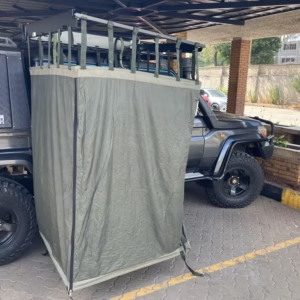
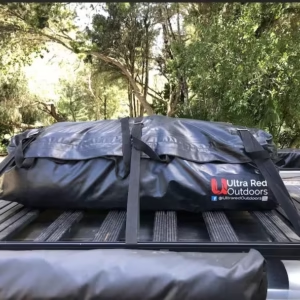
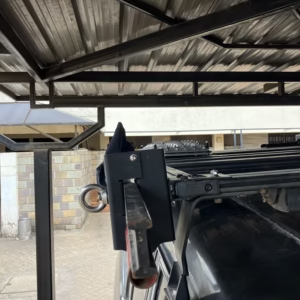
To see and take advantage of all discounted products.
Click HereSelf-Drive Mara Migration 2026: Vehicle Setup Checklist

For a self-drive Mara migration trip, your 4x4 needs secure storage, a fridge for long days out, recovery boards, an awning for shade and a full fuel and water plan. The migration runs July to October, so prepare for crowds and dust. UltraRed builds and fits the gear in Nairobi.
By Cecilia Akoth, Ultrared Outdoors. Last reviewed: 2026-06-16.
The migration will not wait for a half-packed car. If you are planning a self-drive trip to the Maasai Mara for the 2026 migration, here is the short answer: yes, you can self-drive in, the river crossings peak across August into September, and the difference between a great week and a stressful one is how your vehicle is set up before you leave Nairobi.
We build vehicle-specific kit for Kenyan rigs, and we have seen what a Mara run does to a car packed in a hurry. This is written the way we would brief a friend driving down with the kids.
Why a self-drive Mara trip needs more than a full tank
A full tank gets you to Narok. It does not keep your milk cold on day four or pull you out of a wet patch on the Talek road. A self-drive migration trip is a small expedition. The vehicle has to carry a week of living in the back without turning into chaos.
The Maasai Mara is managed by the Narok County Government, and self-drive visitors pay at the gate. That part is straightforward. The hard part is everything between the gate and your last cup of tea.
What the Migration Window Actually Demands of Your Rig
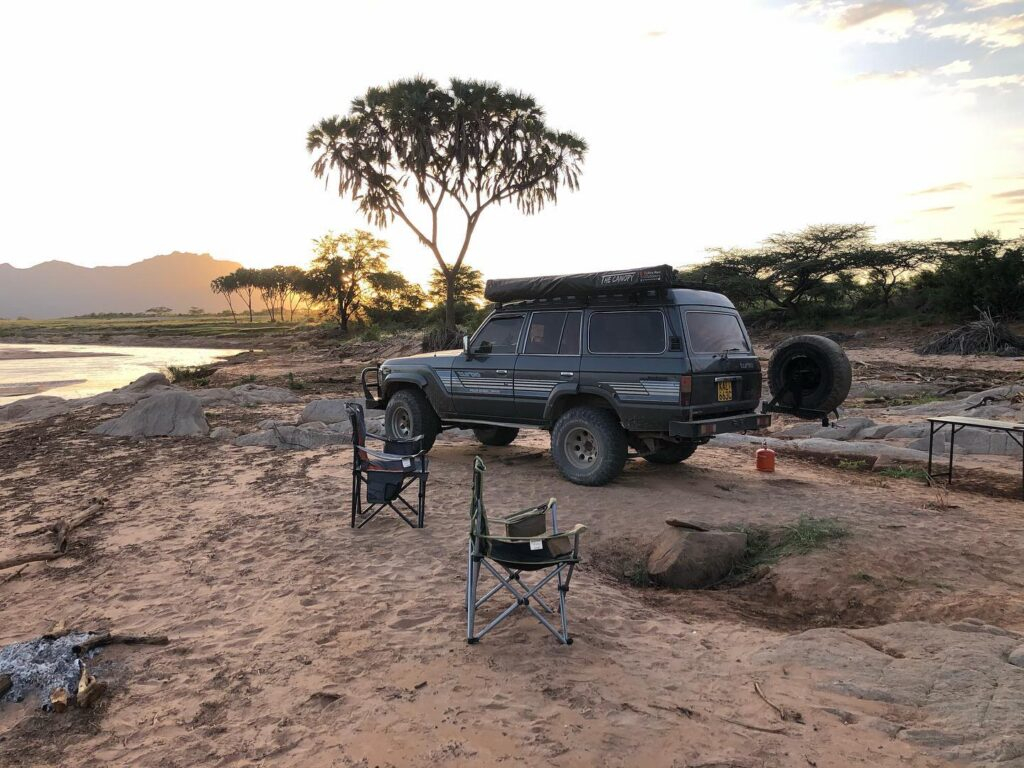
Peak season means longer days chasing crossings, more time off-grid, and roads punished by traffic and weather. The Mara sits high, midday sun is fierce, and the terrain is a mix of murram and black-cotton soil that bites after rain. Your rig needs to handle heat on the kit, dust in everything, and the odd boggy section without drama.
Self-drive vs riding with a guide
A guided trip buys you local knowledge. A good guide reads the herds, knows which river bend is likely to go, and saves you hours of circling. On a first-ever Mara trip that is worth considering.
Self-drive buys you freedom. You stop when you want, stay at a sighting as long as you like, and eat on your own schedule. The trade is that you carry the planning yourself. Get the rig right and self-drive is the better trip for a lot of families.
When to go: the 2026 migration and school-holiday timing
The herds are generally in the Mara from around July to October. The dramatic Mara River crossings tend to fall across August and into September, but exact days follow the rain and cannot be pinned down in advance.
Aim for August through mid-September and give yourself several days rather than a single morning. Crossings are unpredictable. Three or four park days give the herds time to perform. Lock in one day and you are gambling.
August lines up with the Kenyan school holidays, so demand for camps, fuel stops and vehicle fitment all climbs at once. If your car still needs drawers, a slide or an awning fitted, book the workshop slot weeks ahead.
Storage and Food Management for a Week in the Mara

Storage is where most self-drive trips are quietly won or lost. A week of food, cooking gear, clothes and bedding will swallow a cargo bay, and if everything is in soft bags you will unpack the whole boot to find the tin opener every single time.
a) Twin drawers vs soft storage for a family load
Soft storage has its place. Roof bags and pouches are light and flexible for clothes and bedding. The problem is access. For the things you reach for daily, food, cooking kit, tools, a twin-drawer system changes the trip. Two drawers slide out, everything has a home, and the flat top becomes a worktop for making lunch.
For a family load we lean toward hard drawers for the daily-access half and soft storage up top for the bulky-light stuff. You can browse drawer and slide systems to see the configurations, and our piece on drawer systems built for safari work explains why fleet operators run them hard.
Pack by frequency, not by size. Snacks, water and cameras go where a passenger can reach without stopping. Lunch and the day fridge go in the drawers. Bedding, spare clothes and rarely-touched gear go up top or deep in the bay. On a game drive you should never need to pull over and dig.
A real one from our side: we had a family build where the original layout put the food bag low and loose against the fridge slide. A cold drink leaked overnight, soaked the bag, and the whole thing was a soggy mess by morning. We changed that car to a sealed drawer for food with the fridge on its own slide. Small change. No more soaked breakfast.
b) Keeping food and drinks cold for days off-grid
Cold food on a week-long trip is not a luxury. It is food safety. A 12V fridge is the standard answer, and where you mount it matters as much as the fridge itself.
- Fridge slides and why tilt matters at camp
A fridge buried at the back of a drawer module is a fridge you stop using. A fridge slide pulls it clear so you can open the lid properly. A tilt slide angles it down so you can reach the bottom without lifting everything out. At camp, after a long drive, that small convenience is the difference between a tidy routine and a daily wrestle.
- Power realities in the Mara
Off-grid means no mains. Running a fridge off the vehicle alone risks a flat starter battery. Most self-drivers solve this with a second battery or a portable power station so the fridge has its own supply. Plan the power before the trip, keep the fridge level, and pack it cold from home so it is not working from warm. Fridge runtime depends on heat, lid frequency and how full it is packed, so plan with margin rather than to the last watt.
Shade, Shelter, and Campsite Comfort

By midday, the Mara sun is no joke. Reliable shade turns a hot, scratchy lunch stop into somewhere people actually want to sit.
a) Canopy awning for the midday sun
A side-mounted awning gives you instant shade off the vehicle and a dry spot when a storm rolls off the escarpment, which it does, fast. The canopy awning we build uses a silver – coated heat reflective ripstop nylon that reflects sunlight instead of absorbing it. Tis gives you a real relief during scorching Mara afternoons.
b) Roof shelf and roof rack for bulky gear
A roof rack and a flat roof shelf give bulky light gear a home — chairs, a table, recovery boards, a few jerry cans — so they are not eating your cargo bay. Our roof racks are built from extruded aluminium for strength without piling on weight up high. Keep heavy items low in the vehicle and reserve the roof for volume, not your heaviest boxes.
Recovery and Vehicle Preparation for Mara Conditions

Sooner or later the Mara will test you. A short shower turns a graded track into a skating rink, and black-cotton soil grabs a wheel and holds on.
a) Recovery boards and where to mount them
Recovery boards are the most useful self-recovery item for a solo self-driver — they work without a second vehicle and without a winch. Mount them where you can grab them without unpacking the boot. Our guide to recovery boards for sand and mud covers how to use them properly. Cecilia’s take: if the boards are buried in the back, they might as well not be there.
What to carry for a black-cotton bog:
Boards, a folding shovel, a snatch strap, soft shackles and gloves cover most situations a self-driver will meet. Smarter still: after rain, stick to the firmer line, keep momentum without speed, and walk a suspicious patch before you drive it. The Kenya Wildlife Service notes that off-road driving is restricted inside the reserve, so staying on track protects both you and the grassland.
Vehicle-specific fit: matching gear to your 4×4
Generic kit fits nothing well. A universal box wastes space in one car and fouls a seat fold in another. Vehicle-specific gear is built to your actual boot dimensions, so it uses the space you have and bolts to real anchor points.
Land Cruiser, Prado and Hilux setups
The Mara self-drive crowd rolls on a familiar set: Land Cruiser station wagons for the room, Prados for comfort, Hilux double cabs for the payload. We build vehicle-specific racks, drawers, slides and awnings for these and around 30-plus models in all.
Why a vehicle-specific build saves you grief: A build that fits keeps your seat folds working, your third row usable and your cargo volume intact. Because we make the kit here in Kenya, any part that needs replacing is on a Nairobi shelf, not on a slow boat from overseas.
Final Pre-Departure Checklist
The night before is not the night to discover a soft tyre. A calm walk-around makes the departure morning boring — which is exactly what you want.
a) Tyres, recovery, fridge, lights
Walk it in order. Tyres: pressures set, spare checked, jack and wheel brace present. Recovery: boards, strap, shackles and shovel mounted and reachable. Fridge: running, packed cold, slide locked. Electrics: everything works, the power station is charged. Storage: drawers latched, roof load strapped, nothing loose to fly forward on a hard brake.
b) What people always forget
The usual: enough drinking water for every person every day, a basic first-aid kit, packing the fridge cold from home rather than warm, and cash for gate fees where card payment is patchy. Also confirm current park rules and gate hours before you leave. The Narok County Government and reserve management update these from time to time, and finding out at the gate is not the time.
Getting Your Mara Build Ready Before Peak Season
Sort your build in Nairobi before you leave, not in a panic the day before. A proper fitment is measured, built and bolted up — that takes time, especially in the run-up to the August rush when everyone else is having the same idea at once.
Custom, vehicle-specific work has a real lead time. Book weeks ahead, not days. The earlier you get in, the calmer the build and the better the result.
Getting a quote for your model ?
Tell us your vehicle and your travel dates and we will spec the build around the trip you are actually doing. See live pricing on each product page, or request a quote for your vehicle and we will come back with options and lead times. No generic box, just kit that fits your car and your Mara plan.
Frequently asked questions
i) Can you self-drive into the Maasai Mara in 2026?
Yes. Self-drive is allowed in the Maasai Mara, which is managed by the Narok County Government. You pay at the gate, and a high-clearance 4×4 is the sensible choice, especially in the wet. Always check current gate hours and ticket rules before you travel, because they change.
ii) What month is best for the migration in the Mara?
The herds are usually in the Mara from around July to October. The most dramatic Mara River crossings tend to fall across August and into September. Exact crossing days cannot be predicted because they follow rainfall, so build in flexible time rather than booking a single hero day.
iii) Do I need a roof rack for a self-drive Mara trip?
You do not strictly need one, but a roof rack earns its place quickly once you carry a week of kit. It frees the cabin and cargo bay for daily-access items and gives a home for bulky light gear like chairs, a roof shelf load and recovery boards.
iv) How do I keep food cold for a week in the bush?
A 12V fridge on a fridge slide is the reliable answer for multi-day off-grid trips. Mount it where it is easy to reach, keep it level at camp, and plan your power so the fridge keeps running without flattening your starter battery.
v) Is a 2WD enough for the Mara in the wet season?
We would not recommend it. After rain, Mara murram and black-cotton soil turn slick and sticky, and a 2WD with road tyres gets stuck easily. A high-clearance 4×4 with decent tyres and recovery gear is the right tool for a wet-season self-drive.
Ultrared Outdoors designs and builds vehicle-specific roof racks and 4×4 accessories in Kenya. For park access and current reserve rules, the Kenya Wildlife Service and Narok County Government publish official guidance. The Kenya Tourism Board’s Magical Kenya is a good starting point for planning your trip.
Recent Comments
Post Widget