
 Best Seller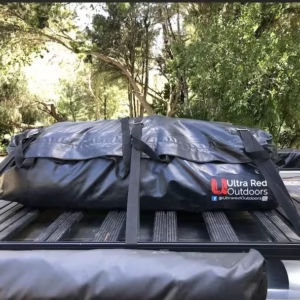
How to Budget for an Overlanding Setup in Kenya 2026
Working out the overlanding setup cost in Kenya before you start buying is the single best decision you can make as a first-time builder. Most rigs that end up half-finished or torn apart and rebuilt twice over share the same root cause: the owner bought gear in the wrong order, paid for fitment problems they did not anticipate, and ran out of budget before the build did anything useful on a real trip. This guide walks you through how to plan an overlanding budget in Kenya the way a manufacturer plans one: by tier, by category, by phase, and by lifetime value rather than by sticker price.
You will not find specific shilling figures here. Live pricing for every product line we manufacture sits on each product page and stays current with material, finish, and fitment options. What you will find is a clear framework for deciding what your build actually needs, what order to buy it in, and how to think about value over the five and ten year horizon that real overland gear earns its keep.
Three setup tiers: matching ambition to budget
Before you cost anything, decide which of these three tiers describes the rig you are actually building. Most buyers we speak with start out aiming at tier two and end up either trimming back to tier one or upgrading components to tier three over a few seasons. Be honest about the trips you will actually take in the next twelve months.
Tier 1: the weekend warrior
This is a rig that goes out two or three weekends a month, mostly within a few hours of Nairobi. Hell’s Gate, Naivasha, Magadi, Aberdares overnighters, the occasional run to Tsavo. Sleeping arrangements are usually ground tents or a rooftop tent on rare trips. Storage requirements are modest because most trips are two or three nights. The build prioritises one or two well-chosen items: typically a drawer system to organise the boot, plus either an awning for shade at camp or a roof rack to carry a tent and a few jerry cans.
Tier 2: the serious overlander
This is the buyer building toward week-long expeditions: Mount Kenya circuit, Lake Turkana, the Mara during shoulder season, cross-border runs into Tanzania or Uganda. Self-sufficiency matters here. The rig usually carries a fridge, a more complete drawer system, recovery gear, lighting for night camp, and an awning sized for the family or travel group. The build is multi-product and expects to be added to over two or three years.
Tier 3: the full-time expedition rig
This tier covers buyers planning extended off-grid travel or running a vehicle for safari operations. Every system on the rig is sized for redundancy and continuous use. Drawer systems are vehicle-specific custom builds with full hardware kits. The roof rack carries a rooftop tent, awning, recovery boards, and lighting. Power, water, fridge capacity, and storage are all specified for two-week-plus trips without resupply. Build cost is significant but cost-per-trip drops sharply when you are using the rig fifty or more nights a year.
The cost categories: where your money actually goes
Across all three tiers, your overlanding setup cost in Kenya breaks down across the same seven categories. Knowing the relative weight of each category is more useful than knowing any one figure, because it tells you where to spend carefully and where you can defer.
Drawer system
For most builds, the drawer system is the single largest line item. It is also the component that defines daily quality of life in the rig. A vehicle-specific twin drawer build with ball-bearing slides and heavy-duty construction will outlast two or three generations of cheaper alternatives, which is why we recommend buyers prioritise this category. Universal off-the-shelf drawers cost less up front; vehicle-specific custom builds cost more but eliminate the rattling, gap problems, and re-fitting work that universal kits often need. See live pricing across the drawers and slides category or the vehicle-specific products such as the Land Cruiser 100 Series rack companion drawer kits.
Roof rack
The roof rack is typically the second-largest line item and the component most owners regret buying twice. Aluminium roof racks built from extruded profiles deliver weight savings that matter for fuel economy, suspension load, and crucially the dynamic load rating you can safely carry. A vehicle-specific rack matched to your factory mounting points fits cleanly and accepts the accessory ecosystem (rooftop tent, awning, jerry can, recovery board, hi-lift jack) without drilling or fabrication. This is one of the two product categories where aluminium construction is genuinely worth specifying.
Awning
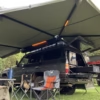
An aluminium canopy awning is the single highest-impact comfort upgrade on any overland rig. Shade extends usable camp time during the hot middle hours, and a full 270-degree wraparound transforms a two-side awning into a complete outdoor living room. Awning cost depends on coverage angle, fabric grade, and vehicle-specific mounting. Look at the main canopy awning product page for live pricing and coverage options.
Fridge and fridge slide
The fridge itself is usually a third-party purchase, but the fridge slide that mounts it inside your drawer or rear cargo area is a manufacturer item. A tilt slide gives you better access when the fridge is mounted low; a straight slide gives you maximum vertical clearance and weight rating. Both use heavy-duty construction and rated locking mechanisms. Browse the fridge tilt slide for the most-specified option in tier-2 builds.
Recovery boards and mounts
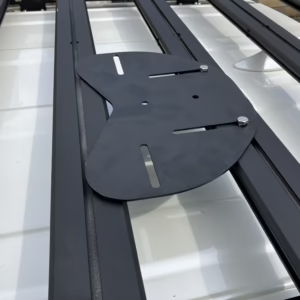
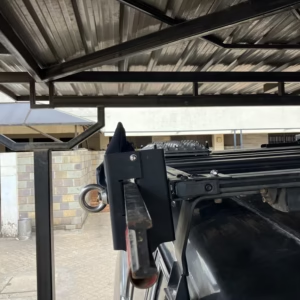
Recovery boards earn their place on any rig that sees sand at Lake Magadi, mud on murram roads after rain, or beach access on the coast. The boards themselves are a one-time purchase that lasts the life of the rig if treated well. The mount that holds them on the roof rack is the manufacturer item: a flat mount keeps the rack profile low, while angled mounts let you stack them on top of other gear. The flat mount product page shows the full options. AA Kenya’s guidance on driving in Kenyan conditions backs up why this gear matters: their driver education resources consistently flag recovery preparation as a core safety requirement for off-bitumen travel.
Lighting
LED lighting is one of the smaller line items in any tier but punches well above its cost. A dimmable two-colour LED bar mounted under the awning or on the rack transforms camp from a head-torch shuffle into an actual living space. Premium-grade components matter here for IP rating, voltage tolerance, and long-term reliability in dust and humidity. The dimmable two-colour LED light is the most-specified option for tier-2 and tier-3 builds.
Soft storage
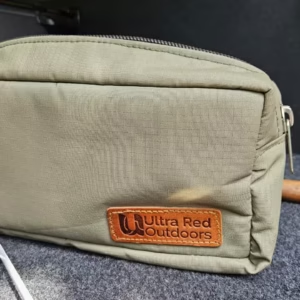
Soft storage (pouches, roof bags, clear-top organiser bags, safari pouches) is the smallest cost category and the easiest to add incrementally. YKK zippers, rugged build, and vehicle-specific shapes matter more than you might expect: a pouch that fits a Land Cruiser 80 console will not fit a Defender 110 cleanly. The full soft storage category covers the standard sizes.
Locally-made versus imported: a value framework, not a price match
Buyers comparing local builds to imported gear usually frame the question as “which is cheaper”. That is the wrong question. The right question is “which delivers more value over the lifetime of the rig”, and the answer breaks down across four factors that imported gear cannot match in Kenya:
- Lead time: imported gear typically arrives in four to twelve weeks depending on freight; locally-manufactured gear ships in days.
- Fitment: imported racks and drawers are designed for vehicles in their home market. Many Kenyan vehicles, particularly grey-imports and older models, have factory mounting variations that imported gear was never tested against. Locally-built, vehicle-specific products fit the cars actually on Kenyan roads.
- After-sales support: a missing bolt, a damaged powder-coat finish, or a fitment query is solved in a phone call locally. Internationally, the same query is a freight quote and a four-week wait.
- Total landed cost: imported pricing usually does not include duty, VAT, freight, clearing, and final fitment. The headline price and the actual cost arriving at your driveway are rarely the same number.
Kenya Bureau of Standards holds locally-manufactured goods to documented quality standards, and you can review the KEBS standards framework for context on how local manufacturing is regulated. Ultra Red Outdoors operates as Kenya’s first locally-manufactured aluminium roof rack maker; that local-manufacturer perspective is built into every vehicle-specific fitment decision we make.
Hidden costs to plan for
The visible cost of overland gear is the product itself. The hidden costs catch out buyers who only budgeted for sticker price.
- Fitment and installation: some products are bolt-on with hand tools. Others, particularly drawer systems and rooftop tent integrations, are best installed by a professional fitter familiar with your vehicle. Budget for a fitting day if you are not confident with the toolkit.
- Accessories and consumables: a roof rack needs accessory mounts (jerry can holders, hi-lift mounts, awning brackets). A drawer system benefits from internal organisers and tie-downs. These small purchases add up quickly if you do not plan for them.
- Vehicle preparation: heavier loads on the roof or in the boot may need uprated suspension, heavier-duty tyres, or load-rated rims. None of this is gear cost in the strict sense, but it is part of the real overland setup cost.
- Lifetime maintenance: powder-coated finishes need annual cleaning especially after coastal trips. Ball-bearing slides need light lubrication. YKK zippers need occasional cleaning. None of this is expensive but it is part of the lifetime cost of ownership.
- Freight and delivery: for upcountry buyers, courier costs to Eldoret, Mombasa, or Kisumu are part of the total cost. Confirm freight before you order so there are no surprises.
The ROI math: cost-per-trip over five and ten years
The most useful way to evaluate any overland purchase is cost-per-trip across the realistic life of the gear. A drawer system that lasts ten years and supports a hundred trips is paying back at a rate that makes the headline price look cheap. A cheaper drawer system that needs replacing at year three has actually cost more, because you have paid twice and still ended up with the gear you should have bought first.
Apply the same logic across categories. A canopy awning that survives a decade of weekly camp deployments has earned its keep many times over. A roof rack that carries a rooftop tent for fifteen years across multiple vehicle changes (most of our vehicle-specific racks transfer cleanly to the same model on a future vehicle) is paying back continuously. Cheap gear that fails on year three of a fifteen-year ownership horizon is a false economy that you only notice in hindsight.
This is why we frame pricing in terms of value rather than sticker price. The right question is not “what does this cost today” but “what does this cost per trip across the next ten years of use”.
How to phase the build: a recommended sequence
If you are building from scratch and cannot buy everything at once, the sequence matters. Here is the order we recommend to buyers planning a tier-2 build over twelve to eighteen months.
- Drawer system first. Daily quality-of-life improvement starts the day you fit it. Without organised storage, every other purchase is harder to use.
- Roof rack second. This unlocks the accessory ecosystem (tent, awning, jerry cans, recovery boards) that the rest of the build hangs off.
- Awning third. Camp comfort upgrade, transforms how you actually use the rig at any campsite.
- Fridge and fridge slide fourth. Self-sufficiency upgrade, extends viable trip length significantly.
- Lighting and recovery fifth. Smaller items that complete the rig and add safety margin.
- Soft storage and accessories last. Easy to add incrementally as you learn what your specific trips actually need.
For a comprehensive view of how to organise the build as you go, our companion guide on overlanding storage organisation covers the daily-use side of the system.
Where to see live pricing and request a custom quote
Every product on the Ultra Red Outdoors site shows current pricing on its product page, with options for vehicle fitment, finish, and accessory specification. That is where you will get accurate numbers for your specific rig.
For tier-3 expedition builds, fleet specifications for safari operators, or any custom drawer or rack configuration, the fastest path is a custom quote covering your full spec sheet. Use the contact page to send through your vehicle, intended trips, and category list, and we will come back with a build-by-build breakdown that reflects current material costs and lead times.
Browse the full range on the main shop page to start putting your 4×4 overland setup pricing together category by category. Plan the build, phase the spend, and the rig will earn back its cost on every trip you take.
Built and fitted in Nairobi by Ultrared Outdoors
Every product mentioned on this page is designed, fabricated and professionally installed by our team in the Ultrared Outdoors workshop on Old Mombasa Road, Nairobi. We custom-fit each kit to your specific vehicle on the bench, then install it in-house. We do not ship flat-packed parts and walk away, and we do not work from templates that “almost fit”. Every aluminium roof rack, drawer system and 270-degree canopy awning we make is tested in real Kenyan conditions before it leaves the workshop floor.
We have built rigs for safari operators heading into the Mara, expedition teams crossing the Chalbi, and weekend overlanders who just want to camp comfortably in Naivasha or on Mount Kenya tracks. Whatever the use case, the build is custom to the vehicle and the way the vehicle is actually used. Request a quote with your vehicle make, generation and intended use, and our team will scope a build for you.