
 Best Seller
Mara Safari Vehicle Setup: What Tour Operators Need in 2026
A safari vehicle setup in the Mara is not a weekend overlanding rig with a logo on the door. For tour operators running fleets, every drawer, slide, awning and roof shelf has to survive corrugations, daily client use, and an operating calendar that barely sleeps in peak season. This guide breaks down what a working safari vehicle setup Mara Kenya actually needs in 2026, written for fleet managers, lead guides and owner-operators making procurement decisions for the next season.
We build vehicle-specific kit for Kenya’s most common safari fleet platforms, and we see what comes back for warranty and what doesn’t. The pattern is clear: gear that earns its place on a Mara fleet vehicle is purpose-built, vehicle-specific, and serviceable locally. Anything else turns into downtime.
The Mara safari operating environment
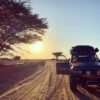
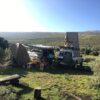
Before you spec a vehicle, understand what you are speccing it for. The Maasai Mara National Reserve and its surrounding conservancies sit at roughly 1,500 to 2,200 metres, with a mix of black cotton soil, rocky escarpment edges, and seasonal river crossings. Long rains in April and short rains in November turn even graded murram tracks into a slipping, sucking mess that hammers suspension and storage systems alike.
Fleet usage intensity is the other variable. A private overlander might do 10,000 to 15,000 km a year. A working safari vehicle in the Mara peak season can clear that in three or four months. Drawers cycle hundreds of times a week. Awnings deploy at every break and lunch stop. Fridge slides are pulled out at every camp transition. Roof racks carry tents, jerry cans, recovery gear, and spotting weight. Spec for that intensity, not for a brochure photo.
Tour operator gear list: what every Mara vehicle should carry
This is the working configuration we see across well-run Mara fleets. Every item has a job, and every item should be vehicle-specific where the option exists.
Drawer system for guide kit and client gear
A twin-drawer system in the rear cargo area is the spine of a safari vehicle. It separates guide tools (recovery straps, first aid, tool kit, spares) from client items (snack boxes, blankets, soft bags). For fleets, vehicle-specific twin drawers with heavy-duty construction and ball-bearing slides make the difference between a five-year build and a fifteen-year build. Our Toyota Land Cruiser 100 Series Twin Drawers are built to factory cargo dimensions, so guides do not lose loadable volume to ill-fitting universal kits.
Fridge slide for client refreshments
A fridge slide is non-negotiable on tour operator vehicles. Clients expect cold drinks and reliable food handling on full-day game drives. A tilt slide makes loading easier when the fridge sits low under a drawer module. Our Fridge Tilt Slides use ball-bearing slides and heavy-duty construction so they hold up to thousands of pull-cycles per season.
Canopy awning for camp transitions
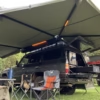
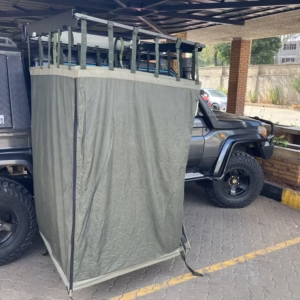
Mid-day sun in the Mara is brutal. A side-mounted canopy awning gives you instant shade for client lunch stops and emergency shelter when a storm rolls off the escarpment. Our Canopy Awning is built from aluminium for low weight and corrosion resistance, mounts directly to a roof rack, and deploys in under a minute by a single guide.
Recovery kit, roof shelf and lighting
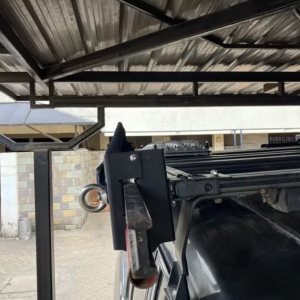
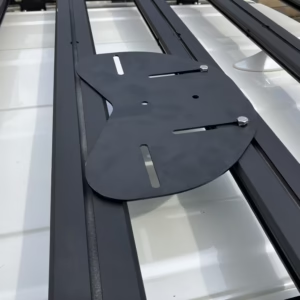
Black cotton soil after rain is unforgiving. Every fleet vehicle should carry recovery boards, a snatch strap, soft shackles, and a shovel, mounted on the roof rack where they are accessible without unpacking the cargo bay. A flat roof shelf gives guides a stable platform for spotting, photographing, and rigging spare wheels or jerry cans. Pair the shelf with a vehicle-specific roof rack like our Toyota Land Cruiser 200 Series Roof Rack. For early-start and late-finish drives, a dimmable LED light mounted under the awning lets guides serve refreshments at dawn, work on a flat tyre at dusk, and turn down to a warm tone for client comfort. Our Dimmable 2-Colour LED Light uses premium-grade components and runs off the vehicle’s 12V circuit.
Fleet-scale considerations
Owner-operators kitting one vehicle have different priorities than fleet managers procuring for ten. At fleet scale, three things matter more than gear features:
- Consistency across vehicles. When every vehicle has the same drawer layout, fridge slide and recovery kit position, guides do not waste time hunting for tools. Trainees ramp up faster and maintenance schedules align.
- Parts availability. A drawer slide that fails mid-peak season needs replacement in days, not weeks. Locally manufactured kit means the spare is on a workshop shelf in Nairobi, not on a six-week container from overseas.
- Predictable maintenance. Plan a low-season service that includes drawer slide cleaning and re-greasing, fastener torque checks on the roof rack, awning fabric inspection, and lighting circuit checks.
Downtime cost and durability ROI
For a private overlander, a broken drawer slide is an inconvenience. For a tour operator, it is a vehicle off the road during peak season, a client experience compromise, and potentially a contract penalty with an inbound operator. The real cost of cheap kit is not the purchase price difference. It is lost revenue per day a vehicle is parked.
Fleet buyers should think in cost-per-trip and cost-per-season terms rather than sticker price. A vehicle-specific drawer system built to last fifteen years across 100,000 to 150,000 km of safari use is a different financial product than a universal kit that needs replacing inside three years.
Daily-use durability over 100,000 km and beyond
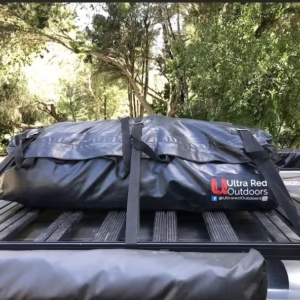
Safari vehicles do not retire at 100,000 km. Plenty of working LC76s and LC100s in the Mara are well past 300,000 km on the odometer, with original chassis and rebuilt drivetrains. The kit on those vehicles needs to match that lifespan. That means heavy-duty construction on every load-bearing component, ball-bearing slides rated for high cycle counts, powder-coated finish for corrosion resistance, and YKK zippers on any soft storage. Where we use aluminium (roof racks and canopy awnings only), it is extruded profile, not bent sheet. Drawers, fridge slides, roof shelves and soft storage are built from materials chosen for cycle life and abuse tolerance, not weight savings.
The locally manufactured advantage
We are a Kenyan manufacturer, and that is not a marketing line. For a Mara fleet, locally manufactured kit means three concrete things: vehicle-specific dimensions for the platforms actually used in Kenya, replacement slides and fasteners available within days, and warranty handled in person at our Nairobi workshop with the same engineers who built the kit. Our experience aligns with what trade bodies like the AA Kenya have flagged for years: locally serviceable supply chains protect operator uptime.
Vehicle-specific custom builds for common Mara fleet platforms
The Mara fleet rolls on a small set of vehicles, and we build vehicle-specific kit for all of them:
- Toyota Land Cruiser 100 Series: Twin drawers, roof rack, roof shelf, canopy awning. The workhorse of high-end Mara fleets. See the LC100 Twin Drawers page.
- Toyota Land Cruiser 200 Series: Roof rack, twin drawers, roof shelf. The 200 carries the premium client product. See the LC200 Roof Rack page.
- Toyota Land Cruiser 76 Series: The Mara favourite for its payload and pop-top conversion compatibility. See the LC76 Roof Rack.
- Land Rover Defender 110 (Classic): Drawer system, roof rack, roof shelf, canopy awning. Still a serious Mara platform.
- Toyota Hilux Double Cab: Roof rack, twin drawers. Common as a guide-and-support vehicle in mobile camps.
If your fleet runs a vehicle not listed, we build custom drawer configurations on request.
KWS and conservancy compliance
The Maasai Mara is a regulated reserve, and the surrounding conservancies (Olare Motorogi, Naboisho, Mara North, and others) each have their own vehicle and operator rules. Roof shelf use for spotting is permitted in conservancy areas under most operator agreements, but not inside the National Reserve where standing in vehicles is restricted. Awning deployment is permitted at designated lunch sites and operator-approved viewpoints, not at game-viewing positions. External lighting and recovery mounts must be securely fitted with no protrusions that compromise vehicle width or pose risk to wildlife.
Current rules are published on the official Kenya Wildlife Service site, and individual conservancies publish their own operator codes. Every fleet build should be checked against current regulations before fitment.
Fleet pricing and bulk orders
Procurement for a fleet is different from a one-off retail order. We work with tour operators on three commercial models: bulk fleet pricing on standardised builds across identical vehicles, custom build programmes for mixed fleets, and phased rollouts where new builds are spec’d as vehicles cycle through your low-season service window.
If you are a tour operator, fleet manager, or owner-operator running safari vehicles in the Mara or wider Kenya, get in touch. Send a fleet list (vehicle model, year, count) and a target build spec, and we will return a fleet quotation, lead time and rollout schedule. Our contact page has direct workshop and sales channels, or browse the vehicle-specific product range in our shop. For a deeper drawer-system breakdown, read our companion piece on vehicle drawer systems for safari guides and tour operators.
Built and fitted in Nairobi by Ultrared Outdoors
Every product mentioned on this page is designed, fabricated and professionally installed by our team in the Ultrared Outdoors workshop on Old Mombasa Road, Nairobi. We custom-fit each kit to your specific vehicle on the bench, then install it in-house. We do not ship flat-packed parts and walk away, and we do not work from templates that “almost fit”. Every aluminium roof rack, drawer system and 270-degree canopy awning we make is tested in real Kenyan conditions before it leaves the workshop floor.
We have built rigs for safari operators heading into the Mara, expedition teams crossing the Chalbi, and weekend overlanders who just want to camp comfortably in Naivasha or on Mount Kenya tracks. Whatever the use case, the build is custom to the vehicle and the way the vehicle is actually used. Request a quote with your vehicle make, generation and intended use, and our team will scope a build for you.