
 Best Seller
Toyota Prado 150 Roof Rack Buyer Guide Kenya
If you own a Toyota Prado 150 in Kenya, you are sitting on one of the best overlanding platforms ever sold here. Picking the right Prado 150 roof rack Kenya setup is the single change that turns it from a capable family SUV into a proper expedition rig. This guide walks you through what actually matters: roof load ratings, mounting systems, build materials, accessory ecosystems, and the locally-manufactured advantage that Kenyan owners now have access to.
Why the Prado 150 Is Kenya’s Default Overlanding Family Wagon
The Prado 150 generation has dominated Nairobi school runs, Naivasha weekend escapes and Mara safari fleets in roughly equal measure since it landed in Kenya. The platform earns that loyalty for practical reasons. It carries seven, runs comfortably on long stretches of murram and gravel, and has the ground clearance for the rocky descents you find on the Aberdare circuit or the lava terrain near Lake Magadi. Toyota Kenya continues to position the Prado as a long-distance touring vehicle, and the second-hand market reflects that.
The catch is that a stock Prado 150 was not designed for the load-out a serious Kenyan trip demands. A rooftop tent, a fridge worth its salt, recovery boards, jerry cans, and a couple of camp chairs add up fast. That weight has to go somewhere safe, secured, and within the vehicle’s dynamic load characteristics. That is what a purpose-built roof rack solves.
Why a Purpose-Built Prado 150 Roof Rack Matters
The roof of a Prado 150 has a published static and dynamic load rating. The dynamic figure (load while moving) is the one that matters for overlanding because corrugations on Kenyan murram roads can effectively double the perceived weight on the roof. Three things separate a purpose-built rack from a generic basket bolted to factory cross-bars.
- Mounting points engineered for the platform. A Prado 150 specific rack uses the factory mounting locations that the chassis was designed around, spreading load across the roof structure rather than concentrating it on two cross-bars.
- OEM rail compatibility. The rack should mount cleanly to the factory roof rails or replace them entirely with a rated system, never sit awkwardly on top of plastic trim.
- Load rating that reflects Kenyan conditions. A rack rated for European tarmac is not the same as one rated for the washboard between Narok and Sekenani. Specifications should account for sustained vibration loads.
Skip these and you risk loosened fasteners, paint damage, and in the worst case a rack that walks during a corrugated descent.
The Aluminium Build Advantage
Roof racks are one of the only product lines where weight savings genuinely change how the vehicle drives. Every kilogram on the roof affects centre-of-gravity behaviour through corners and on side-slope tracks, which is exactly the terrain Kenya throws at you.
An aluminium roof rack delivers three meaningful gains for the Prado 150 owner:
- Weight savings. Aluminium typically weighs around a third of comparable steel, freeing payload for the gear that actually does something on the trip.
- Corrosion resistance. Coastal trips to Watamu, Diani or Lamu expose roof racks to salt-laden air that eats unprotected steel from the inside out. Aluminium handles that environment without sacrificing structure.
- Long service life. A well-built aluminium rack is a 10 to 15 year purchase, not a 3 year purchase. Material standards from ASTM International on aluminium alloys back this up: the right grade and treatment give you fatigue resistance that steel under powder-coat simply cannot match in salt-air conditions.
The Locally-Manufactured Advantage
For a long time, every aluminium roof rack in Kenya was imported. Lead times stretched to months, fitment was generic, and warranty claims required a flight ticket. Ultra Red Outdoors changed that by becoming the first locally-manufactured aluminium roof rack maker in Kenya, building Prado 150 specific extruded aluminium racks here at home.
What that means in practice for the Prado 150 buyer:
- Fitment tested on actual Kenyan-spec Prados, not on a CAD file in another country.
- Lead times measured in days, not months, with no shipping delays or customs complications.
- After-sales support that you can drive to. If something needs adjusting after your first long trip, it gets sorted in Nairobi.
- Vehicle-specific custom builds are economically viable, because we are not paying for international logistics on every variant.
Mounting Options for the Prado 150
The Prado 150 supports three main mounting approaches. The right choice depends on your existing trim and how you plan to load the vehicle.
Roof rail mount
If your Prado came with factory roof rails, this is the most common path. The rack clamps to the existing rails using rated brackets. It is straightforward to install, removable for service, and works well for general overlanding loads.
Flush or low-profile mount
A flush mount sits closer to the roof line and reduces aerodynamic drag and wind noise. This is the right pick for owners doing long highway runs to and from base, and for anyone who parks under a typical Nairobi shopping centre or office basement clearance.
Direct mounting points
For maximum load capacity and the best fitment for a rooftop tent or full expedition load, the rack mounts directly to the vehicle’s structural mounting points using engineered brackets. This is the configuration we recommend for Prado 150 owners running rooftop tents and a full accessory ecosystem.
Building the Full Accessory Ecosystem
A roof rack on its own is just a platform. The value comes from the gear it lets you carry properly. The Toyota Prado 150 Roof Rack is built to integrate cleanly with the rest of an overland kit.
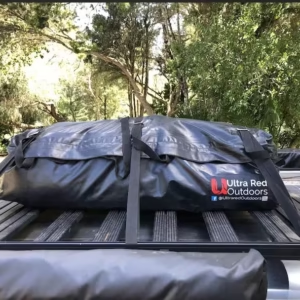
- Roof shelf: A Prado 150 Roof Shelf adds a flat, secure surface for soft bags, recovery gear, or a low-profile rooftop tent.
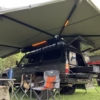
- Canopy awning: The Prado 150 Canopy Awning mounts to the rack and gives you instant shade at lunch stops in the Mara or after a long day on the Maralal road. The awning itself is also an aluminium build, weight-rated for sustained wind exposure.
- Rooftop tent: The rack’s load rating and mounting geometry are what make a tent build possible. The Prado 150 Roof Rack is engineered with rooftop tent mounting in mind.
- Recovery boards: Mount points keep your boards accessible without occupying drawer space inside the cabin.
- Lighting: A Dimmable 2-Colour LED Light mounts to the rack edge and gives you both a warm camp glow and a cool task light for cooking or vehicle work.
Pairing the Rack with Drawers for a Complete Build
The roof rack handles bulky and weatherproof gear. The drawer system handles everything you want secured, organised, and accessible from the rear hatch. Together they are how you stop living out of crates that slide around on the Mara plains.
Two Prado 150 specific drawer options pair with the rack:
- The Prado 150 Twin Drawers system fits the standard cargo bay and gives you two heavy-duty pull-out drawers with ball-bearing slides, ideal for kitchen kit, tools, and recovery gear.
- The Prado 150 Custom Drawers option is for owners who want a fridge slide integrated, want third-row seat retention, or have a specific layout requirement. Vehicle-specific custom builds are where the locally-manufactured model really earns its place.
A Prado 150 with the rack on top, the awning down one side, and twin drawers in the back is a complete overland build. Weeks-long expedition capability without buying a new vehicle.
Real-World Use Cases
The Mara safari run
Murram corrugations, sustained dust, and full payloads of camping gear. The aluminium build handles the dust environment without corrosion concerns, and the engineered mounting spreads vibration load across the roof rather than concentrating it. The Kenya Wildlife Service conservancy access points sometimes need a few hours of slow-track driving in either direction, which is exactly the kind of vibration load a rack design has to absorb without loosening.
The coastal trip
Salt air on the road from Mariakani to Lamu is unforgiving. Steel brackets corrode within a season unless religiously maintained. Aluminium and stainless hardware shrug it off, which means your rack still looks and performs the same after three years of coast trips.
The rocky terrain run
Lava fields near Lake Magadi, the Suguta Valley, the descent into the Kerio Valley. These are loads on the suspension and on the roof at the same time. A rack that flexes with the vehicle and stays secured is the only acceptable answer. Generic basket racks loosen on this terrain. Vehicle-specific racks do not.
How to Choose the Right Prado 150 Roof Rack
Decision framework, in order of priority:
- Confirm fitment. Buy a rack engineered for the Prado 150 specifically, not a universal rack with adapters. Vehicle-specific is the difference between a 15-year build and a constant maintenance project.
- Check the load rating. Match the rated dynamic load to your planned gear, including a rooftop tent if that is part of the build. Always derate slightly for sustained Kenyan corrugations.
- Choose your accessory ecosystem. The rack should accept rooftop tent mounts, awning brackets, recovery board mounts, and lighting from the same product family. Mixing brands creates fitment headaches.
- Plan for the next ten years. Aluminium build, locally-supported, vehicle-specific. That combination ages well in Kenyan conditions in a way that imported steel does not.
Where to Buy
The full Prado 150 roof rack range, drawer systems and matching accessories are on the Ultra Red Outdoors shop. See live pricing on the Toyota Prado 150 Roof Rack product page, or browse the wider accessory shop for awnings, drawers, lighting and recovery gear that fits a complete Prado 150 build.
If you want a custom configuration, a fleet quote for a tour operation, or a fitment check before you buy, reach out and we will scope the build with you. Local manufacturer, vehicle-specific fitment, and the support of a team based here in Kenya. That is what makes the Prado 150 worth setting up properly the first time.
Built and fitted in Nairobi by Ultrared Outdoors
Every product mentioned on this page is designed, fabricated and professionally installed by our team in the Ultrared Outdoors workshop on Old Mombasa Road, Nairobi. We custom-fit each kit to your specific vehicle on the bench, then install it in-house. We do not ship flat-packed parts and walk away, and we do not work from templates that “almost fit”. Every aluminium roof rack, drawer system and 270-degree canopy awning we make is tested in real Kenyan conditions before it leaves the workshop floor.
We have built rigs for safari operators heading into the Mara, expedition teams crossing the Chalbi, and weekend overlanders who just want to camp comfortably in Naivasha or on Mount Kenya tracks. Whatever the use case, the build is custom to the vehicle and the way the vehicle is actually used. Request a quote with your vehicle make, generation and intended use, and our team will scope a build for you.