
 Best Seller
Best Roof Racks for Toyota Land Cruiser 200 Series in Kenya
If you own a Toyota Land Cruiser 200 Series and you are shopping for a roof load solution, the question is not whether you need a rack. It is whether the rack you are about to buy is built for a 2.7-tonne wagon driven on Kenyan roads. Picking the best roof rack Land Cruiser 200 Kenya owners can rely on means matching the build, the mounting system, and the accessory ecosystem to how the vehicle actually gets used here, from Karen weekend runs to two-week Turkana expeditions.
This guide walks through why the LC200 deserves a purpose-built rack, what to compare when shortlisting, and how a locally manufactured aluminium rack compares to the universal options most owners encounter first.
Why the LC200 is one of Kenya’s most popular overlanding platforms
The Land Cruiser 200 Series sits at the top of the wishlist for serious Kenyan overlanders for three reasons that matter the moment you leave tarmac.
Suspension and chassis. The LC200 was engineered to carry load over rough ground for long distances. The body-on-frame construction handles the corrugated stretches between Marsabit and Loyangalani without the chassis flex that wears out unibody SUVs.
Payload and roof load capacity. The LC200’s roof is rated to carry meaningful static load when parked and a reduced dynamic load on the move. The figures vary by model year, so check your vehicle’s owner manual for the dynamic roof load rating. According to Toyota Kenya’s official distributor CFAO Mobility, the 200 Series in Kenyan trim was sold as a flagship multi-terrain wagon, and the roof structure reflects that intent.
Reliability and parts. A rack that lives on the roof for 10 years only makes sense on a vehicle the owner expects to keep for 10 years. Kenyan mechanics know the 200 Series, and the platform is genuinely supported here.
Why a purpose-built LC200 roof rack matters
Walk into any 4×4 fitter on Lang’ata Road and you will see universal racks bolted onto every imaginable vehicle. They look the same. They are not the same.
A universal rack is engineered to fit many roofs adequately, which means it fits no single roof correctly. On the LC200, that compromise shows up in three places: the rack often sits taller than necessary, the load distribution concentrates stress at the wrong points, and the accessory hole pattern rarely lines up with your existing awning, jerry can holders, or Hilift mount.
A vehicle-specific rack is cut and welded for the LC200 roofline. It mounts to the factory pickup points the engineers designed for load. It sits low, it does not whistle at 110 km/h on the Mombasa highway, and every accessory in the same product family bolts on without an adapter plate. That is the difference between a rack you tolerate and a rack you forget is there.
Key buying criteria for a Toyota Land Cruiser 200 roof rack
Use this five-point framework when comparing options.
1. Material: aluminium versus steel
A full-length steel rack on a 200 Series adds significant mass at the highest point in the body, raising the centre of gravity exactly where you do not want it raised. An aluminium roof rack made from extruded aluminium profiles delivers the same load rating at a fraction of the weight. Aluminium also does not rust in coastal humidity, which matters for anyone running between Nairobi and Diani regularly.
2. Mounting system
The best LC200 roof rack uses the factory-engineered mounting points on the roof. Look for a foot system that distributes load across the LC200 roof structure, not a clamp-on designed for a generic rain gutter. Vehicle-specific feet also seal the mounting points properly, which keeps water out of the headliner during the long rains.
3. Load rating
You need two numbers: static load (what the rack can hold when parked, e.g. a rooftop tent with two adults sleeping in it) and dynamic load (what the rack can carry while driving). Verify both numbers with the manufacturer in writing; be cautious of any rack that quotes only one.
4. Accessory compatibility and weight
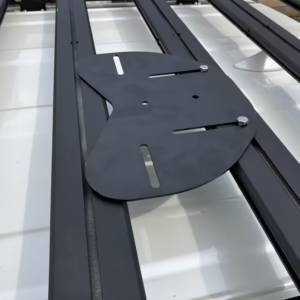
A rack is a platform; the value comes from what bolts to it. Before buying, list every accessory you plan to fit in the next two years: rooftop tent, awning, jerry can holders, recovery board mounts, Hilift mount, LED light bar. Then check that the rack’s slot pattern or hole pattern accepts each one. Vehicle-specific systems usually have an in-house accessory range that simply works. And remember: every kilogram on the roof matters more than a kilogram in the boot, which is why a lighter aluminium roof rack lets you carry more useful gear under the same total load budget.
The locally manufactured advantage
Most aluminium roof racks sold in Kenya are imported. They land at Mombasa, clear duty, and arrive at your fitter weeks after ordering. Replacement parts follow the same pipeline.
Ultra Red Outdoors is the first locally manufactured aluminium roof rack maker in Kenya. The racks are extruded, cut, and assembled here, by people who fit them onto Kenyan vehicles every week. That changes three things for the buyer:
- Lead time. A locally built rack does not wait on a container; replacement profiles and fasteners are available without a six-week shipping window.
- Fit. The rack is tested on Kenyan-spec LC200s, so trim variations between markets do not catch the buyer out.
- After-sales. If something needs adjusting after the first 5,000 km of corrugated road, the maker is in Nairobi, not on a different continent.
The Toyota Landcruiser 200 Series Roof Rack is built specifically for the platform, with a load-rated aluminium structure and an accessory ecosystem that bolts straight on without adapter plates.
Recommended LC200 roof setup
A roof rack on its own is incomplete. Here is the build most LC200 owners settle on after their second long trip, in the order of priority.
1. The rack itself. Vehicle-specific aluminium, full length over the cabin and load area, with a slot pattern that accepts the rest of your kit.
2. A roof shelf for the rear half. The LC200 Roof Shelf sits behind the rack as a flat work platform for guides, tour leaders, or anyone who needs an organised loading surface above the boot.
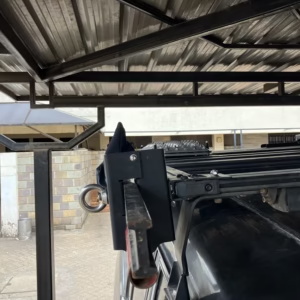
3. Recovery board and Hilift mounts. Recovery boards are bulky and dirty; you only need them when you need them. The Maxtrax Flat Mount keeps them flat and accessible without eating into your roof load real estate. Pair it with the Roof Rack Hilift Mount, which bolts the jack to the rack so it is out of the way until you flat-tyre on the Magadi road.
4. A canopy awning. An aluminium canopy awning gives you instant shade for cooking, kit sorting, or a midday break in the Mara. The Canopy Awning mounts to the side of the rack and deploys in under a minute.
5. LED lighting. Camp lighting matters more than buyers expect until their first night cooking in pitch dark. A Dimmable 2-Colour LED Light mounted under the awning or rack gives warm light for camp and cool light for kit work.
6. A drawer system below. The Land Cruiser 200 Twin Drawers sit in the boot and pair with the roof setup. The roof carries bulk and dirty kit; the drawers carry the daily-use, valuable, and food items. Together they turn the LC200 into an organised expedition vehicle instead of a moving pile.
Real-world fitment notes for Kenyan terrain
A rack lives a different life in Kenya than it does in a European catalogue. Three terrain realities shape what a serious overlanding roof rack Kenya owners install actually has to handle.
Corrugated dirt between northern circuit camps. The road from Loiyangalani to South Horr will find every loose fastener you forgot to torque. Vehicle-specific mounting feet that distribute load properly survive this; universal clamp systems often require retorquing every long trip.
Coastal humidity and salt air. The corridor from Mombasa to Lamu lives in salt air for half the year. According to the Kenya Meteorological Department, coastal relative humidity routinely exceeds 80% during the long rains, and the salt-laden breeze is constant. Steel racks rust here. Aluminium does not. That is the practical case for an aluminium rack on any vehicle that crosses the Likoni ferry more than twice a year.
Mara dust and Turkana grit. Dust gets into every fastener and sliding accessory. A rack designed with dust in mind uses sealed fasteners and avoids hidden pockets where grit packs. After a Mara week, a quick rinse should clear the rack. After a Turkana fortnight, a hose-down and a torque check is the minimum maintenance ritual.
Rack-only versus full-build approach
Buy rack-only when you already own an awning, recovery boards, and a tent you want to migrate from another vehicle. Confirm the rack’s slot or hole pattern is compatible with your existing accessory mounts before committing.
Buy a full build when you are starting from a clean rack and want every accessory to mount cleanly without adapters. The factors in favour of this route are simpler integration, single-point warranty, and a known compatibility set. See live pricing for each component on the product pages and request a quote through the Ultra Red Outdoors team.
Build the LC200 you actually want to drive
The best roof rack Land Cruiser 200 Kenya owners can fit is one engineered for the platform, made from materials that survive the local climate, and backed by an accessory range that pays for itself trip after trip. A vehicle-specific aluminium build from a local manufacturer takes the LC200 from a capable wagon to a properly outfitted overlander without the import lead times or fitment guesswork.
Ready to spec your build? Start with the LC200 roof rack product page for live pricing, or browse the full Ultra Red Outdoors shop for the accessory ecosystem.
Built and fitted in Nairobi by Ultrared Outdoors
Every product mentioned on this page is designed, fabricated and professionally installed by our team in the Ultrared Outdoors workshop on Old Mombasa Road, Nairobi. We custom-fit each kit to your specific vehicle on the bench, then install it in-house. We do not ship flat-packed parts and walk away, and we do not work from templates that “almost fit”. Every aluminium roof rack, drawer system and 270-degree canopy awning we make is tested in real Kenyan conditions before it leaves the workshop floor.
We have built rigs for safari operators heading into the Mara, expedition teams crossing the Chalbi, and weekend overlanders who just want to camp comfortably in Naivasha or on Mount Kenya tracks. Whatever the use case, the build is custom to the vehicle and the way the vehicle is actually used. Request a quote with your vehicle make, generation and intended use, and our team will scope a build for you.