
 Best Seller
Range Rover Classic Overland Build: Roof Rack and Drawer Setup in Kenya
The Range Rover Classic was never built to be a museum piece. Long-travel coil suspension, permanent four-wheel drive, and a body designed for big payloads on rough ground make it a vehicle that earns its place on a Kenyan overland build. If you own a 4Dr Classic and you’re planning a Range Rover overland build Kenya buyers can actually use on Tsavo dust roads or the long route up to Lake Turkana, the question isn’t whether to fit a roof rack and drawer system. It’s how to do it without compromising the character of the vehicle that pulled you into Classic ownership in the first place.
The Range Rover Classic as an overland platform
The Classic shape ran from 1970 to 1996, and the 4Dr versions from the late 1980s onwards remain the favoured base for a serious build. Long-travel coil springs at all four corners, a torquey V8, full-time AWD with a low-range transfer case, and a body-on-frame chassis built for load. The engineering brief was off-road first, comfort second, which is why a classic Range Rover overland setup remains competitive against modern SUVs three decades later.
In Kenya the Classic has a small but committed following, with parts knowledge, mechanic depth, and resale that holds firm because supply is finite and overlander demand keeps growing. Where the Classic asks for thought is payload management. The original suspension was tuned for the era’s loads, and adding a fully kitted roof rack, awning, drawer system, recovery gear, and water can tip it into territory the springs and brakes weren’t designed for.
Why the 4Dr Classic roof rack needs to be vehicle-specific
Universal roof racks made for a generic SUV silhouette don’t work on a Classic. The roofline, rain-gutter geometry, and body-mount points are all specific to the 4Dr Classic shape. A bolt-on rack designed without those measurements sits at the wrong height and concentrates load on points the body wasn’t designed to take.
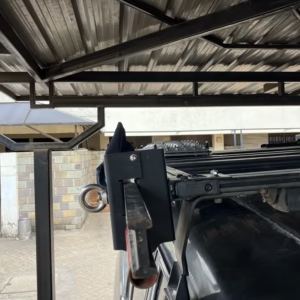
Our Range Rover 4Dr Classic roof rack is cut and welded to fit this single silhouette. Mounting feet land on the factory rain-gutter line, crossbars follow the roof curvature, and the rack sits flush rather than perched. Load is transferred through the body in the way the engineers planned for, and the visual line of the Classic is preserved. For owners checking Land Rover’s Classic-era roof load specifications, a vehicle-specific rack lets you actually use the published rating without guesswork.
Aluminium roof rack advantages on a classic chassis
Roof racks are one of two Ultra Red lines built from extruded aluminium profiles. The case on a Classic is mechanical, not aesthetic.
- Weight management. A Classic’s coil suspension and original braking system were specced before modern overland loads existed. A lighter rack means more of your payload budget goes to gear that matters: water, fuel, recovery kit, sleep system. Steel racks of equivalent strength weigh significantly more, and that weight sits at the highest point of the vehicle.
- Payload preservation. Every kilogram saved on the rack is a kilogram you can carry as cargo without tipping into overload. On a 30-year-old vehicle, that margin is the difference between a build that lasts and one that breaks suspension components a year in.
- Corrosion resistance. Kenyan coastal trips, river-crossing humidity, and post-rain road salt all attack steel. Aluminium with a powder-coated finish handles those conditions far better.
- Stiffness without bulk. Extruded aluminium profiles can be engineered for high section stiffness without the wall thickness steel needs. The rack takes a rooftop tent, awning, jerry cans, and recovery boards without flex.
This is also the first locally-manufactured aluminium roof rack in Kenya, which means warranty work, fitment adjustments, and accessory additions happen in-country rather than via a six-week shipping cycle.
Compatible drawer system options
The Classic load bay is shorter and narrower than a Land Cruiser equivalent. Off-the-shelf universal drawer kits often run too long for the tailgate-to-second-row dimension. Two options work:
Regular twin drawers
Our regular twin drawers are built with high-quality materials and ball-bearing slides rated for sustained heavy load. For a Classic the configuration is trimmed at the build stage to clear the wheel arches and second-row seat back. Twin drawers give you sorted dry storage on one side and kitchen or fridge mount on the other.
Land Rover single drawer
If the Classic is set up for solo travel, the Land Rover single drawer is the lighter, simpler option. Heavy-duty construction with ball-bearing slides, half the floor footprint of a twin setup, and open space preserved for bulky kit. Both options sit within our broader drawers and slides range, which includes fridge slide options if you want a chilled-storage column added.
Weight management considerations
This is where Classic builds go wrong most often. The vehicle will accept the load. The springs and brakes are what tell you it was too much.
- Heavy gear goes low and central. Drawer-stored items should be the heaviest things in the build. Roof rack load is reserved for low-density gear: rooftop tent, awning, recovery boards. Don’t put a tool roll, water tank, or fridge on the roof.
- Audit suspension before adding load. A 30-year-old Classic almost certainly needs new springs, shocks, and bushings before you add overland kit. Doing it in that order saves you from chasing handling problems that are really about tired suspension trying to carry the load.
- Brake performance is the silent constraint. A loaded Classic on a Mt Kenya descent or a Rift Valley pass needs braking margin. Pad upgrades and a fluid flush before any extended trip are non-negotiable. The Kenya Wildlife Service requires self-recovery capability for many rougher conservancy routes, and brakes that fade on a long descent compromise that capability.
Style and function: keep the Classic looking like a Classic
The visual point of a Classic build is restraint. The vehicle has a deliberately understated profile, and a good build respects that.
- Match the rack to the roof curvature. A vehicle-specific rack sits flat. A universal rack sits proud and breaks the line.
- Keep the colour palette honest. Powder-coated finish in matte black or matched body colour disappears into the silhouette.
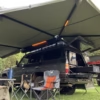
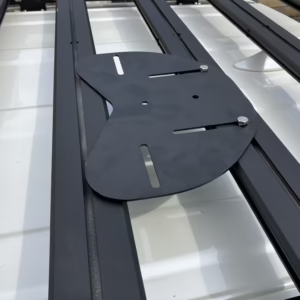
- Mount accessories where the geometry calls for them. A Maxtrax flat mount on the rack keeps recovery boards out of the load bay. A canopy awning mounted to the rack rail extends usable shade at camp without changing the on-road profile.
- Resist the bolt-on temptation. Light bars and decorative accessories rarely earn their place.
Owner and community context in Kenya
The Kenyan classic 4×4 community is small enough that you’ll know most of the active Range Rover Classic owners by sight within a year of joining a club run. Parts get traded, mechanics with Classic experience get recommended, and overland routes get shared between owners who’ve actually driven them. SAE International documents Classic-based overland builds globally, and the engineering trade-offs hold on a Northern Frontier District route just as they do elsewhere.
Putting the build together
For a Range Rover overlanding build we’d recommend in this order:
- Suspension and brakes refresh first. No accessories until the running gear is healthy.
- Vehicle-specific roof rack. The Range Rover 4Dr Classic Roof Rack is the platform everything else mounts to.
- Drawer system matched to your travel pattern. Twin drawers for two-up trips, single drawer for solo builds.
- Recovery and shade as standard fit. A Maxtrax flat mount and a canopy awning earn their place on every trip.
- Lighting and soft storage last. Easier to add once the structural build is sorted.
Ready to specify your build? See the live Range Rover 4Dr Classic Roof Rack product page, or browse the full Ultra Red Outdoors range and drawer and slide range to plan the load-bay layout. For custom fitment specific to your year of Classic, request a quote and we’ll work the spec with you.
Built and fitted in Nairobi by Ultrared Outdoors
Every product mentioned on this page is designed, fabricated and professionally installed by our team in the Ultrared Outdoors workshop on Old Mombasa Road, Nairobi. We custom-fit each kit to your specific vehicle on the bench, then install it in-house. We do not ship flat-packed parts and walk away, and we do not work from templates that “almost fit”. Every aluminium roof rack, drawer system and 270-degree canopy awning we make is tested in real Kenyan conditions before it leaves the workshop floor.
We have built rigs for safari operators heading into the Mara, expedition teams crossing the Chalbi, and weekend overlanders who just want to camp comfortably in Naivasha or on Mount Kenya tracks. Whatever the use case, the build is custom to the vehicle and the way the vehicle is actually used. Request a quote with your vehicle make, generation and intended use, and our team will scope a build for you.